
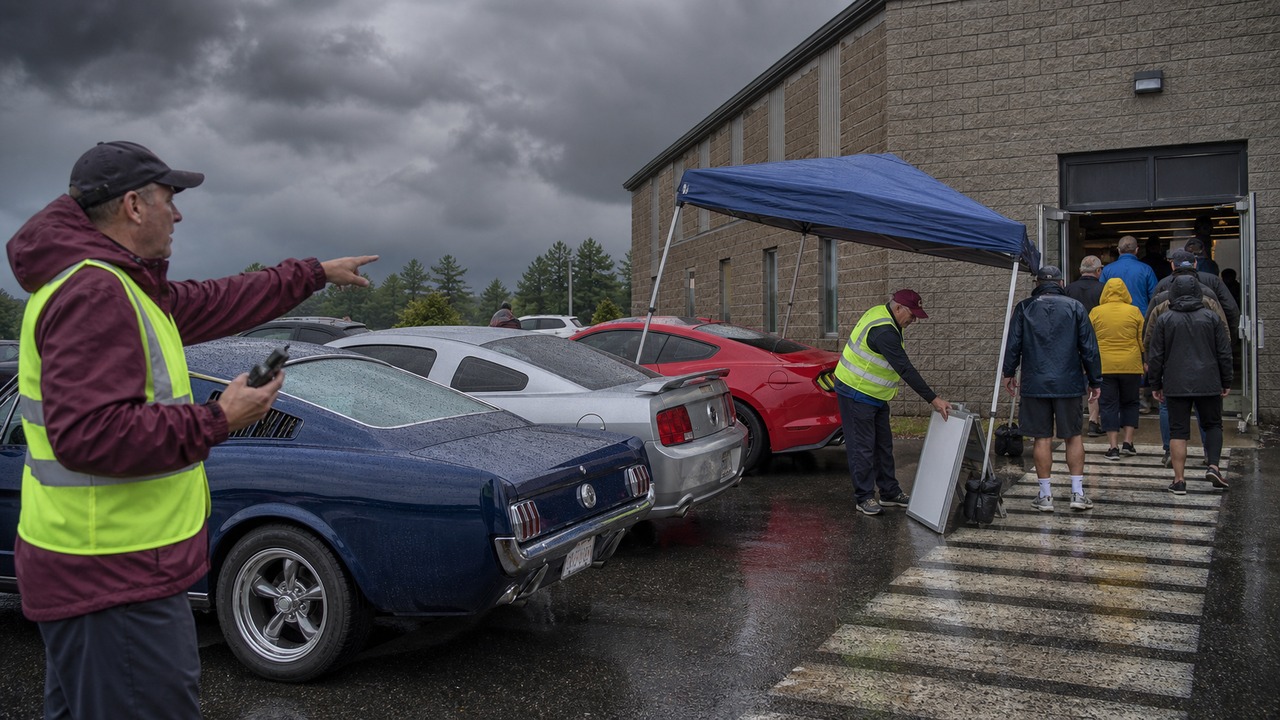
A useful weather plan does more than decide whether the show is on. It tells one person when to pause activity, gives every volunteer the same shelter direction, keeps arriving cars out of pedestrian paths, and defines the evidence needed before the field reopens.
A shower changes the show surface. Thunder changes the safety decision. That distinction should be written down before entrants, vendors, and spectators begin to arrive. The National Weather Service guidance for organized outdoor activities recommends a specific lightning plan that names the weather monitor, the stop trigger, safe shelter, and the person authorized to resume activity. A Mustang club can use the same discipline without turning a local show into a complicated emergency exercise.
Post the weather lead beside the day’s contact sheet, not in a separate document that volunteers may never see. That person watches the forecast and radar; the show chair makes the operational call; lane volunteers carry one short instruction to the field. The chain is deliberately small. A decision that belongs to everyone usually belongs to no one when the first thunder is heard.
Treat thunder as a stop signal, not a rain setting
Ordinary rain may call for slower parking, towels at the registration table, and a pause in judging. Lightning calls for people to move to substantial buildings or hard-topped vehicles. A pop-up canopy, registration tent, open pavilion, or convertible is not a substitute. The difference belongs in the lead sentence of the volunteer briefing because a familiar rain routine can otherwise continue after conditions have become unsafe.
The plan should identify the exact shelter before the field opens. If the venue has a permanent building, record which doors remain unlocked and which route does not cross the incoming-car lane. If hard-topped vehicles are part of the fallback, estimate capacity for volunteers and visitors who did not arrive in one. The National Weather Service’s outdoor-venue lightning toolkit is useful here because it treats evacuation time as part of the stop decision, not as something to solve after the warning.
Make three calls, not one vague weather decision
- The evening-before call
- Confirm the forecast window, shelter capacity, vendor contact list, and the route that volunteers will use if the field closes. This is also the time to decide whether tents, flags, and loose signs should be reduced before setup.
- The pre-opening call
- Check current radar, local warnings, and the roads feeding the venue. The official New England 511 map combines NHDOT-reported incidents, closures, driving conditions, and weather information. A clear show field does not help if the approach road is flooded, blocked, or backing traffic into an unsafe turn.
- The live-field call
- Keep one monitor on duty while the show is active. Record the time activity stopped, the message sent, the shelter used, and the time of the last thunder. The record prevents a change of volunteers from quietly resetting the clock or reopening one part of the field before the rest.
Use one weather line: “Show activity is paused. Move to the marked building or a hard-topped vehicle by the pedestrian route. Wait for the same channel to announce reopening.”
This is different from the normal arrival plan. The existing Events page can announce a weather note, but the live instruction should come from one phone number, radio channel, or public-address voice. Avoid sending competing estimates such as “ten minutes” or “probably passing.” Conditions, not the event schedule, decide when the next message is due.
Design the shelter move before the first Mustang arrives
Walk the move from the registration point to shelter at normal visitor pace. Look for cables, curbs, puddles, tight gaps between parked cars, and places where a person using a mobility aid would be pushed into the vehicle lane. The route should remain understandable after flags and temporary signs have been lowered. One weatherproof arrow at each decision point is more dependable than a dense map taped under a canopy.
Cars already parked should normally stay parked while people move to shelter. Mixing a mass vehicle exit with a pedestrian evacuation creates a new conflict. Lane volunteers should stop new entries at a safe holding point, keep the emergency access route open, and direct people already on the field by the shortest separated path. The action is about people first; drying cars, covering interiors, and resetting display materials wait until the field is safe.
Vendors and judges need the same rule. Power leads should not be handled in the rain, display boards should be lowered before wind makes them airborne, and no volunteer should remain outside to protect a tent or sign. The FEMA guide to alerts and warnings explains the difference between a watch and a warning and reinforces why a short, recognized message is more useful than local improvisation.
Reopen with the same discipline used to pause
The weather lead should announce reopening through the same channel used for the stop. Before that message, one volunteer checks the pedestrian route, another checks the vehicle lane, and the registration lead confirms that shelter doors and emergency access remain clear. These are quick observations, not a fresh event setup. If standing water, fallen branches, damaged power leads, or blocked access remain, the affected area stays closed even when the lightning threat has passed.
Write the actual stop and restart times on the event sheet. After the show, keep a one-paragraph note about what worked: whether everyone heard the message, whether the shelter held the crowd, and where the route became confusing. That small record gives the next club event a better starting point than memory.
The best rain plan is quiet when the sky stays clear and unambiguous when it does not. One decision owner, one shelter route, one message channel, and one recorded reopening call protect people without asking volunteers to invent policy in the parking lot.